All blog posts ……..Start each work week with the latest issue. Scroll down to subscribe!
10 high-impact do’s and don’ts for better ID outcomes
If you work in instructional design, it may be no surprise to you that corporate learning isn’t universally loved by employees. And audience reaction aside, overall corporate learning doesn’t appear to be universally (or even predominantly) effective.
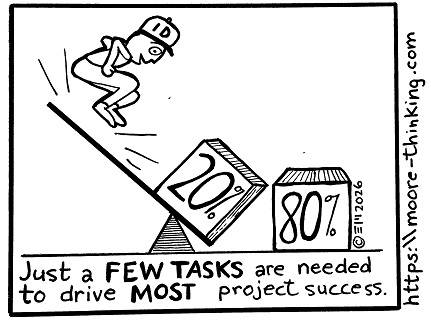
In an environment increasingly characterized by downsizing, outsourcing, and a focus on tools (vs. process and best practices), our best approach is to focus on the biggest “bang for the buck” strategies: the 10 “do’s and don’ts” that have the biggest impact on learner outcomes, timeline, and budget.
1. DO front load effort.
Spend a lot of time up front, in the analysis/strategy phase, to ensure that:
- Training actually has the potential to fix a business problem or achieve a business goal, and
- You fully understand the business behaviors that need to change.
2. DO back up training with bulletproof documentation.
No learner can memorize all the detailed steps associated with multiple tasks or processes after being exposed to them briefly; and expecting them to do so all but ensures project failure. Provide your learners “parting gifts” of documentation (or links to documentation) that’s clear, concise, complete, accurate, and easy for them to navigate and to consume.
3. DO assess learners authentically.
Knowledge assessments (such as multiple choice quizzes) should play a small role in skills training. Focus instead on realistic scenarios—and provide learners a lot of them.
4. DO make changes while they’re quick and cheap to make.
Produce an outline as early in the process as possible, and then work with your SMEs to refine it until they’re comfortable signing off on it. Doing so is the quickest, least expensive way to ensure that you understand project scope and sequence. (If you wait until you’ve built out materials, you may have sunk weeks into creating high-quality work that trains the wrong things.)
5. DO establish good working relationships with SMEs from the very beginning.
SMEs can make or break project quality and timelines, so approach them in a spirit of collaboration.
6. DON’T rely on AI to do your thinking.
AI may or may not be able to reduce development time in specific situations. But if it can design instructional materials quicker and better than you can, you might want to consider a new field.
7. DON’T rely on gimmicks to make up for bad design.
Few learners today are impressed by background music, scavenger hunts, or gratuitous gamification that adds to seat time. Focusing on delivering what learners need to complete relevant learning as successfully and quickly as possible is far more motivating than any sticker, fake certificate, or leader board.
8. DON’T lead with tools.
Tools have a way of framing the conversation; of putting us immediately in the position of adapting a potential solution to what the tool happens to support (and all tools are limited). Design first. Then choose a tool that supports as much of your design as possible and adapt (or compromise, if necessary) on the rest.
9. DON’T assume video is effective.
Video isn’t a good fit for all instructional content. And because it’s time-consuming both to produce and maintain compared to other deliverable formats, going down the video path when it’s not warranted wastes development time and leads to poor learning outcomes.
10. DON’T forget to “sell” your training to your learners.
All audiences learn better if they’re motivated, and this is especially true of adult leaners. While we can’t make the horses drink, so to speak, we can explain up front exactly how our instruction can help our learners in their person or professional lives. And then we can use our genuine enthusiasm to help get them excited about it.
The bottom line (TLDR)
Doing the right things the right way gives us the best chance of achieving successful learner outcomes. And that’s more important than ever in today’s world of increasing expectations and ever-decreasing team size, timelines, and budgets.
What’s YOUR take?
Do you have a different point of view? Something to add? A request for an article on a different topic? Please considering sharing your thoughts, questions, or suggestions for future blog articles in the comment box below.
 Moore Thinking
Leave a comment