All blog posts ……..Start each work week with the latest issue. Scroll down to subscribe!
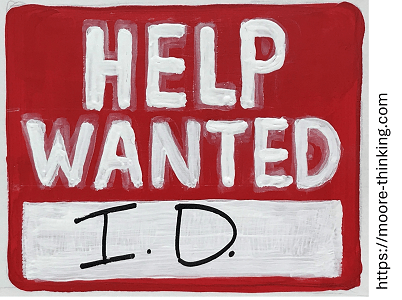
Have you got what it takes to be an Instructional Designer?
Perhaps you’re thinking of changing careers. Perhaps you already work in an ID-adjacent role such as teacher, trainer, or technical writer, and have been asked to add instructional design to your current list of responsibilities.
Or perhaps you’re in management or talent acquisition and have been asked to bring ID skills onboard.
No matter the reason for your interest, it can be useful to take stock of these 5 categories of knowledge, aptitudes, and skills that effective instructional designers rely on every day.
1. Writing (aka thinking) skills.
Writing is thinking made visible. Writing skills enable us to identify a thesis (a learning outcome) and main points (learning objectives); to research; to sift through mounds of information; to interview experts; to pick up the phone and ask questions until we understand both details and implications; to cherry-pick what’s important and toss what’s not; and to prioritize, organize, and outline information so that it can be presented effectively.
Writing skills are bedrock to instructional design because they enable an ID to grasp what needs to be communicated, to communicate it effectively to all stakeholders, and to evaluate outcomes and adjust as necessary.
And, of course, writing skills also enable an ID to produce deliverables—whether those involve AI prompts, slide decks, video scripts, e-learning storyboards, interactive copy, instructions, or assessments.
2. Instructional skills.
Instructing—that is, teaching or training—is a specialized form of communication that underpins everything we do as IDs. It requires the ability to identify learner expertise and to back-fill information and skills as necessary. It requires us to scaffold learners as they build skills and to measure mastery of the right things in a meaningful way.
Instructing also requires us to think beyond the written or spoken word at times—to break out the markers and whiteboard and draw a picture if that’s what it takes to get the point across. It requires us to draw analogies, tell stories, connect what our learners already know to new knowledge, and to come up with activities that help drive home points.
The best IDs often have experience as educators, trainers, or facilitators, because there’s no substitute for having spent time in the instructional trenches. But instructor chops alone aren’t sufficient. Good IDs need to be able to create effective instructional materials, not just deliver them.
3. Project management skills.
ID projects run the gamut from small to large. Many, if not most, require months of coordinated effort that spans departments and roles—and bring them in on time and on budget requires project management skills.
Whether or not they have a formal project management designation after their title, IDs need to be able to work with managers to capture business requirements; interview subject matter experts to capture details; work with technical experts to troubleshoot authoring tool and integration issues; learning management system administrators to resolve e-learning assignment and reporting problems; and sometimes, IDs even have to collaborate with executives to help correlate training to business results and key performance indicators.
4. Technical skills.
IDs need to be proficient in a variety of media authoring applications and know how to read technical specifications such as the Web Content Accessibility Guidelines. And while it’s not an absolute requirement, knowing a few tag and scripting languages (such as XML, HTML, CSS, client-side JavaScript) doesn’t hurt, because these languages underpin a lot of WYSIWYG tool-generated code.
IDs need to be able to create interactive web copy that conforms to UX requirements; accessible PDFs and interactive e-learning modules; and videos complete with closed captions and transcripts. If they’re top notch, they’ll also be familiar enough with graphic design principles that they can curate or produce instructional images. And, of course, all IDs need to be proficient at packaging training for user access and troubleshooting delivery.
5. A “tomorrow” mindset.
Because today’s must-have tools will have a different interface in a few months and will more than likely be replaced within a couple of years, tool-specific expertise is of limited value. The best IDs understand what kind of communication and interactions need to take place to drive knowledge and skills transfer for a particular subject and audience. Armed with this understanding, they’re in a good position to evaluate new tools, change gears, and quickly determine how to create effective materials using new technologies and software applications.
IDs who can do this will be effective for years to come.
The bottom line (TLDR)
Good instructional designers are a bit like Renaissance men and women. They know a lot about many different fields and are interested in how things connect and overlap, which gives them the ability to “think outside the box.” They’re able to communicate with a variety of different people and to produce materials that are of solid value and appeal with whatever tools they happen to have at hand. These are all skills worth cultivating—no matter your role or industry.
What’s YOUR take?
Do you have a different point of view? Something to add? A request for an article on a different topic? Please considering sharing your thoughts, questions, or suggestions for future blog articles in the comment box below.
 Moore Thinking
Leave a comment